
The Triangle's big trees are one of its most familiar features, and they are also what does the damage when storms come through. Durham's canopy covers about 52% of the city (36,600 acres, according to the City's 2017 tree canopy assessment), and much of the street canopy is aging willow oak. When a hurricane remnant, an ice storm or a short-lived tornado hits, the result is the same: trees on roofs, cars and power lines, and a lot of stumps afterward.
Stump Grinding Durham is a free quote service, not a tree company. We connect Durham-area homeowners with independent local stump grinding and tree companies for free, no-obligation quotes; the company you choose quotes, schedules and does the work directly with you.
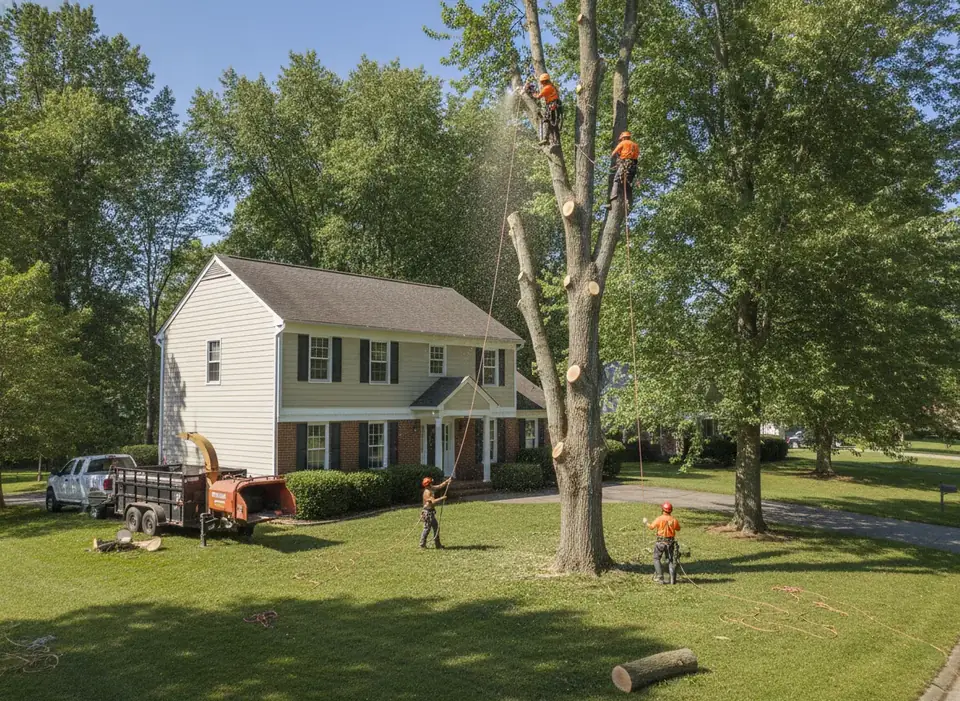
The storms that shaped Durham's tree damage
National Weather Service and NOAA storm records show how often trees are the story:
- Hurricane Hazel, October 1954: the NWS event review reports sustained winds of 75 mph with gusts to 90 mph at Raleigh-Durham Airport, and "heavy damage … to forests, and to property as a result of falling trees."
- Hurricane Fran, September 1996: the NWS Raleigh narrative calls Fran "the worst natural economic disaster to occur in North Carolina history." It reports that "several hundred thousand trees were uprooted or broken" and that tens of thousands of homes were damaged by falling trees, with power out for more than 10 days in many areas. (Reported gust figures for Fran differ between sources.)
- Ice storm, December 4–5, 2002: NOAA records a half inch to one inch of ice reaching Durham, with "large trees and power lines … downed by the ice all across the area" and nearly one million people in central NC without power.
- Tornado, May 15, 2014: an EF1 near Hope Valley damaged about 40 homes, "most of the damage … caused by falling trees," including a large oak that sliced through a roof.
- Tropical Storm Michael's remnants, October 2018: gusts downed numerous trees across Durham County, with peak outages around 20,000 customers.
- Tornado, September 27, 2024: an EF1 in northern Durham County near Bahama snapped and uprooted a mix of softwood and hardwood trees.
Even a modest ice storm can do it. NOAA notes that a quarter inch of freezing rain in March 2014 caused "widespread downed trees and power-lines" in Durham.
Which trees tend to fail
Every tree can break in a big enough storm, but some local species have known weak points, according to NC State Extension's plant profiles:
- Tulip poplar: "Fast-growing means they are weak-wooded and susceptible to limb breakage in high winds or from ice/snow."
- Bradford (Callery) pear: "weak crotches that break with age, wind and ice."
- Old willow oaks: the EPA has described Durham's 1930s willow oak plantings as nearing the end of their long lives. Big, aging trees over streets and houses are a familiar sight in older neighborhoods.
- Dead ash trees: emerald ash borer was first detected in Durham County on August 6, 2015 (NC Forest Service), and the whole state has been under quarantine since September 2015. NC State says tree death typically occurs within five years of initial infestation.
If a tree is leaning, hollow or already dead, having it looked at before storm season is cheaper than dealing with it on your roof. For tree work, ask whether an ISA Certified Arborist (a voluntary credential, verifiable online) is involved.
What to do in the first hours
Stay clear of wires
Treat any line a tree is touching as live. Report it to your power company or 911 and keep people and pets away.
Figure out whose tree it is
A tree from the City right-of-way in Durham is Urban Forestry's to deal with: call Durham One Call at 919-560-1200. In Raleigh, the City lists 919-829-1911 to report a downed tree.
Document the damage
Take photos of the tree, the house and anything it hit before cleanup starts. Your insurer may ask for them.
Get written quotes
Even in a rush, get the scope and price in writing, including whether stump grinding and debris haul-away are included.
Hiring after a storm
After a widespread storm, demand spikes and unfamiliar crews appear. The same checks apply as any other time, and they matter more:
- A certificate of liability insurance naming the company. Storm work near houses and lines is where accidents happen.
- Workers' comp if the company has three or more employees; check with the NC Industrial Commission's insurance coverage search.
- A written quote stating what's included: tree removal, crane or rigging, limb and log haul-away, and whether the stump is ground (stump work is usually extra).
- For the stump: grinding depth, surface roots, chip cleanup or haul-away, and backfill.
- Who requests the NC 811 locate before grinding, and a reminder to mark your private irrigation, invisible fence and lighting lines.
North Carolina has no license specific to stump grinding or tree work, so these questions are your main protection. Our storm-damaged trees and stumps page and tree removal page go into more detail.
Debris and the stump, later
Durham's yard waste cart takes limbs under 4 inches and 4 feet; subscribers get two free bulky brush pickups a year. According to the City's guidance, stumps are not collected curbside (confirm with Durham One Call). After some storms the City has announced special debris pickups, so watch for notices. Burning debris is unlawful inside Durham city limits.
The stump itself can usually wait. Once the trunk is gone, the stump is just an obstacle, and a grinder can deal with several storm stumps in one visit. Grinding typically goes 6–12 inches below grade; the hole is filled with chips or topsoil and will settle as the chips decompose, so top it up after a few months. Uprooted trees are different: the root plate may be lifted out of the ground, and the hole may need regrading. See stump removal for extraction versus grinding.
Typical costs
Typical ranges from published cost guides (2025–2026) — estimates, not quotes:
| Item | Typical range |
|---|---|
| Tree removal (Durham, typical) | about $400–$1,800; stump work usually extra |
| One average stump, Durham area | about $150–$450 (Durham average about $327) |
| Each additional stump | about $40–$70 |
| Chip haul-away | $2–$3 per inch, or about $80–$125 |
See the Durham stump grinding cost guide for the full table. If you are outside the city, our Hillsborough page covers that town's rules. For permit questions after a storm, read tree permit rules in Durham and Raleigh.
Frequently asked questions
Who removes a storm-downed tree from a Durham street?
Trees in the City right-of-way are cared for by Durham's Urban Forestry Division. If a tree falls from the strip between the sidewalk and the street, or blocks the road, call Durham One Call at 919-560-1200. A tree that fell from your own lot is generally yours to clear, even if it lands near the street. Treat any wire it touches as live.
Does the stump need to be ground right after a storm?
No. The urgent work is getting the trunk and limbs off the house, driveway or lines. The stump can usually wait weeks or months, and grinding it later is often cheaper because it can be quoted with other stumps. Mark it so nobody trips or mows into it, and keep in mind that some species sprout from the stump.
What does storm tree removal cost in Durham?
Published cost guides put a typical Durham tree removal at about $400 to $1,800, with stump work usually extra. Storm jobs can cost more when a tree is on a roof, tangled in lines or needs a crane. Stump grinding afterward typically runs about $150 to $450 for one average stump. These are estimates, not quotes.
Get quotes for storm cleanup
A free quote request takes about a minute. Tell us what came down and where, and independent local tree and stump companies can send no-obligation quotes.