
Do You Need to Call 811 Before Stump Grinding in Durham?
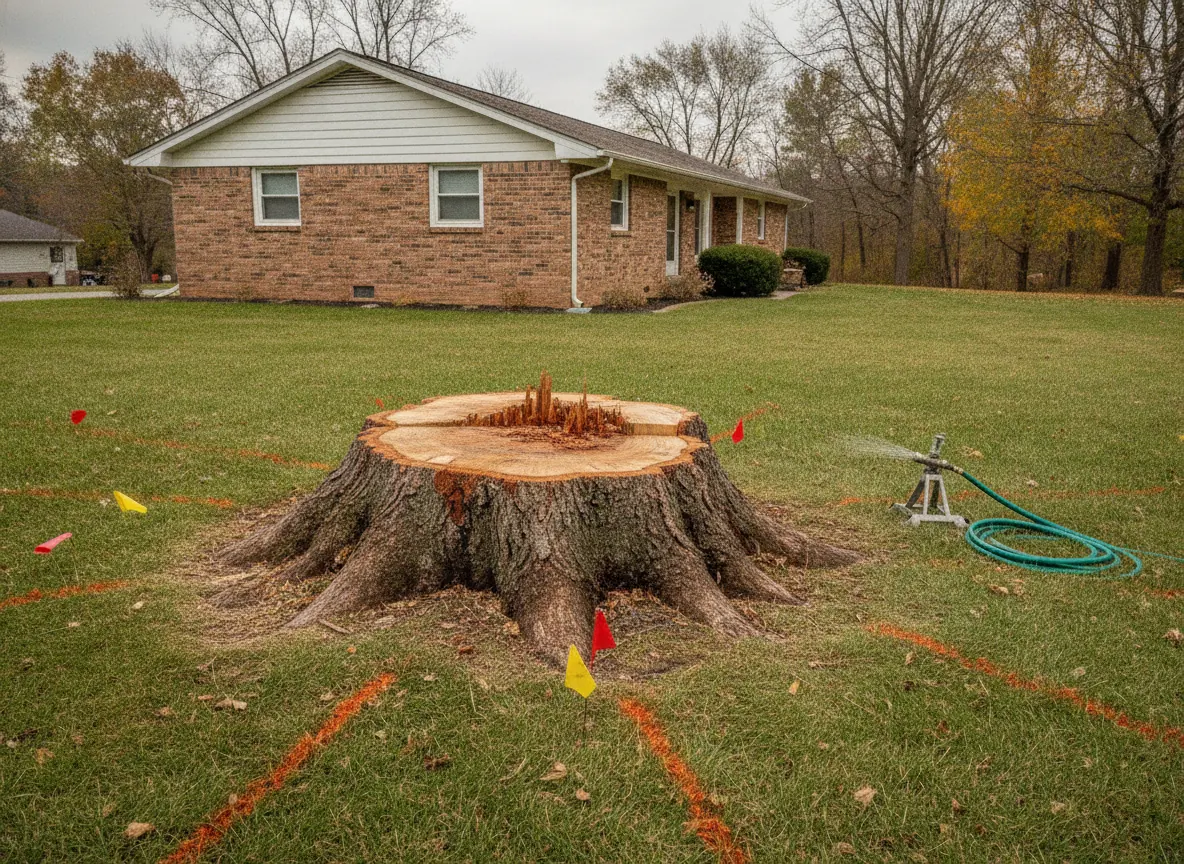
Yes, in practice you do. North Carolina’s 811 law treats as excavation any work that moves or removes “earth, rock, or other materials in or on the ground” with manual or mechanized equipment. Its list of examples includes grading and backfilling and is “not limited to” them. A stump grinder uses a powered wheel to cut wood, roots and soil below grade, so mechanized grinding appears to fit that definition. The law has no minimum depth, so a shallow grind isn’t exempt either. The company you hire should file an NC 811 locate request at least three full working days before it starts.
Stump Grinding Durham is a free quote service, not a grinding company. We connect Durham-area homeowners with independent local stump grinding and tree companies for free, no-obligation quotes. This is general information, not legal advice.
What North Carolina’s 811 law says about digging
The rules are in the Underground Utility Safety and Damage Prevention Act (G.S. 87-115 and following). The definitions section, G.S. 87-117, covers a wide range of work: augering, boring, digging, grading, scraping, trenching and more. The notice duty falls on “the person responsible for the excavation or demolition.” NC811 says state law requires anyone doing excavation to contact it before starting.
The statute never names stumps, and we found no published NC811 position on stump grinding. That’s why the honest answer is that grinding appears to count. The depth question is clearer. The only depth figure in the exemptions is tilling less than 12 inches deep for farming or gardening. Typical residential grinding goes about 6 to 12 inches below grade, deeper if you plan to replant. That is cutting, not tilling, so a shallow grind doesn’t qualify for that exemption.
Three full working days, and a ticket good for 28 days
Under G.S. 87-122, notice must be given “no less than three full working days” before work begins. Working days leave out Saturdays, Sundays and state holidays. In a week with no holiday, a request filed on a Thursday means grinding can start the following Wednesday at the earliest. Keep that in mind when you schedule. A quote in hand on Friday doesn’t mean a grinder in your yard on Monday.
The ticket expires 28 calendar days after the work start date. That matters on bigger jobs, like a new-build lot in south Durham’s 27703 or in Apex or Morrisville, which have some of the newest housing in the area according to the Census Bureau’s ACS 2024 5-year figures. Those lots often have a row of leftover pine stumps that may take more than one visit. Once the lines are marked, the law treats 24 inches on either side of each mark as the tolerance zone. See multiple stump grinding for how those jobs are usually quoted.
Who should call 811: you or the stump grinding company?
The company you hire should file the request. G.S. 87-124 does exempt the owner of a single-family home who digs on their own land, outside any utility right-of-way or easement. But that exemption is for the owner doing the work. A contractor grinding your stump for pay isn’t the owner, so it doesn’t cover them. When you compare quotes, ask each company to confirm it will request the locate, and ask for the ticket number before grinding day.
If you rent a grinder and do it yourself, typically about $180 to $365 a day according to published cost guides, you’re technically exempt on your own lot outside an easement. The call is free, though, and a rented grinder cuts into the ground just as a contractor’s does. Our guide to renting a stump grinder vs. hiring a pro covers the rest of that choice.
What 811 won’t mark: irrigation, dog fence and lighting
This is the part most homeowners miss. NC811 marks publicly owned lines only. In its own words, “private lines, on private property are not marked.” The statute’s definition of a utility facility also leaves out irrigation systems and septic tanks. So even after the paint and flags go down, some lines in your yard won’t be marked. Before the machine starts, walk the yard with the grinder operator and point out:
- Sprinkler and irrigation lines and heads
- Invisible dog fence wire
- Low-voltage landscape lighting
- Power, gas or water lines to a shed, pool, workshop or detached garage
In Durham’s older areas this takes some homework. In ZIP 27701, more than half of homes were built before 1980, per the same ACS figures. Lines added by past owners may not show up on any drawing. A home inspection report or a neighbor who knows the house can help. If you don’t know where a line runs, say so before work starts.
Surface roots and street-side stumps widen the dig
A stump with roots spread across the lawn is a bigger job than the stump alone. NC State Extension says red maple “makes a dense mat of surface roots,” and many older Durham streets are lined with willow oaks from the City’s 1930s planting push. If your quote includes surface root grinding, the cutting wheel will cover much more ground than the stump. Make sure the locate and your own list of private lines cover that whole area.
If the stump is in the strip between the sidewalk and the street, stop before you hire anyone. It may be the City’s tree and the City’s job. Call Durham One Call (919-560-1200) and ask Urban Forestry first.
Before grinding day: a short 811 checklist
- Ask every company on your shortlist whether it files the NC 811 locate. Get the answer in the written quote.
- Allow at least three full working days after the request before the start date.
- Ask for the ticket number, and check that the marks are down before the machine arrives.
- Mark or list your private lines yourself.
- On a multi-visit job, make sure the work stays within the ticket’s 28 days.
The full job, from measuring to backfill, is on the stump grinding process page, and typical prices are in the Durham stump grinding cost guide. When you’re ready, request free quotes from independent local companies, and ask each one how it handles the 811 call.
Quick answers
Does a shallow stump grind still need an 811 locate?
Yes. North Carolina’s 811 law sets no minimum depth for excavation, and the only shallow-depth exemption is tilling under 12 inches for farming or gardening. Typical residential grinding goes about 6 to 12 inches below grade with a powered cutting wheel, so it appears to count as excavation. Ask the company to confirm it will request a locate.
Who is supposed to call 811, me or the stump grinding company?
The law puts the duty on the person responsible for the digging, which is the company you hire. The homeowner exemption covers only an owner working on their own single-family lot, outside utility easements, so it doesn’t cover a contractor. Ask for the ticket number before grinding day. If you rent a grinder yourself, calling is still free.
Will 811 mark my sprinkler lines or invisible dog fence?
No. NC811 marks public utility lines only; private lines on private property are not marked, and the state law leaves irrigation systems out of its definition of a utility facility. Before grinding, walk the yard with the operator and point out sprinkler lines, pet-fence wire, landscape lighting and any power, gas or water lines to a shed, pool or garage.
General information, not legal advice. Stump Grinding Durham is a free quote service. The independent company you choose quotes, schedules and does the work directly with you.